If you look carefully, you will find most kitchens have at least one. Walk through the BOH on almost any site visit, and you’ll find it eventually, usually pushed against a wall in a spot that used to be reserved for something else. During design, it looked like exactly the right call. It checked every box on the spec sheet. It had capabilities that sounded genuinely impressive in the planning meeting. It solved a real problem, at least on paper.
Then after months of planning and preparations, the kitchen finally opened.
The menu changed after a few times the way menus always do once real guests start ordering off it. The staff became used to the operations workflow, and it became a kind of routine. This day-to-day routine looked nothing like what someone pictured before the kitchen opening. Between all these expectations and reality clash, that expensive piece of equipment in the kitchen stopped being treated like equipment and rather became a mere shelf for storage.
This happens more than most kitchens would care to admit, and it’s rarely because anyone made a careless call. Usually the decision just got made against the wrong questions.
The Equipment Itself Is Rarely the Problem
It’s easy to look at an idle piece of equipment and blame the purchase, wrong model, wrong brand, money that shouldn’t have been spent like that carelessly. That’s usually not what actually happened.
The real issue rarely comes down to the equipment. It comes down to whether the decision was ever tied to how the operation would actually run once it was moving at real volume, with the actual staff working from a menu that had already gone through a few rounds of changes. A high-end machine isn’t a bad investment on its own. It turns into one the moment nobody stops to ask who would be running it, how often, and why.
That gap between what looks good in a spec meeting and what actually earns its keep on a busy Friday night is where most of this comes from.
What Good Equipment Selection Actually Starts With
Getting equipment right starts long before anyone opens a vendor catalogue. It starts with knowing the operation well enough that equipment choices answer a real question instead of functioning like a mere furniture buying process.
That means knowing the menu in real depth, not just the dish names but the techniques and volume they demand once the line is moving. It means knowing production volume at peak, not on an average day, because equipment that handles a slow Tuesday fine can fall apart entirely during a full banquet rush. It means being honest about staffing, since a kitchen that’s regularly short-handed needs a different setup than one running a full, well-trained brigade every shift. It means knowing what skills are actually on the floor, because a piece of equipment that needs constant calibration or specialized technique is only as good as the team’s ability to run it.
Miss any one of those, and equipment selection stops being planned. It’s a guess with a spec sheet attached.
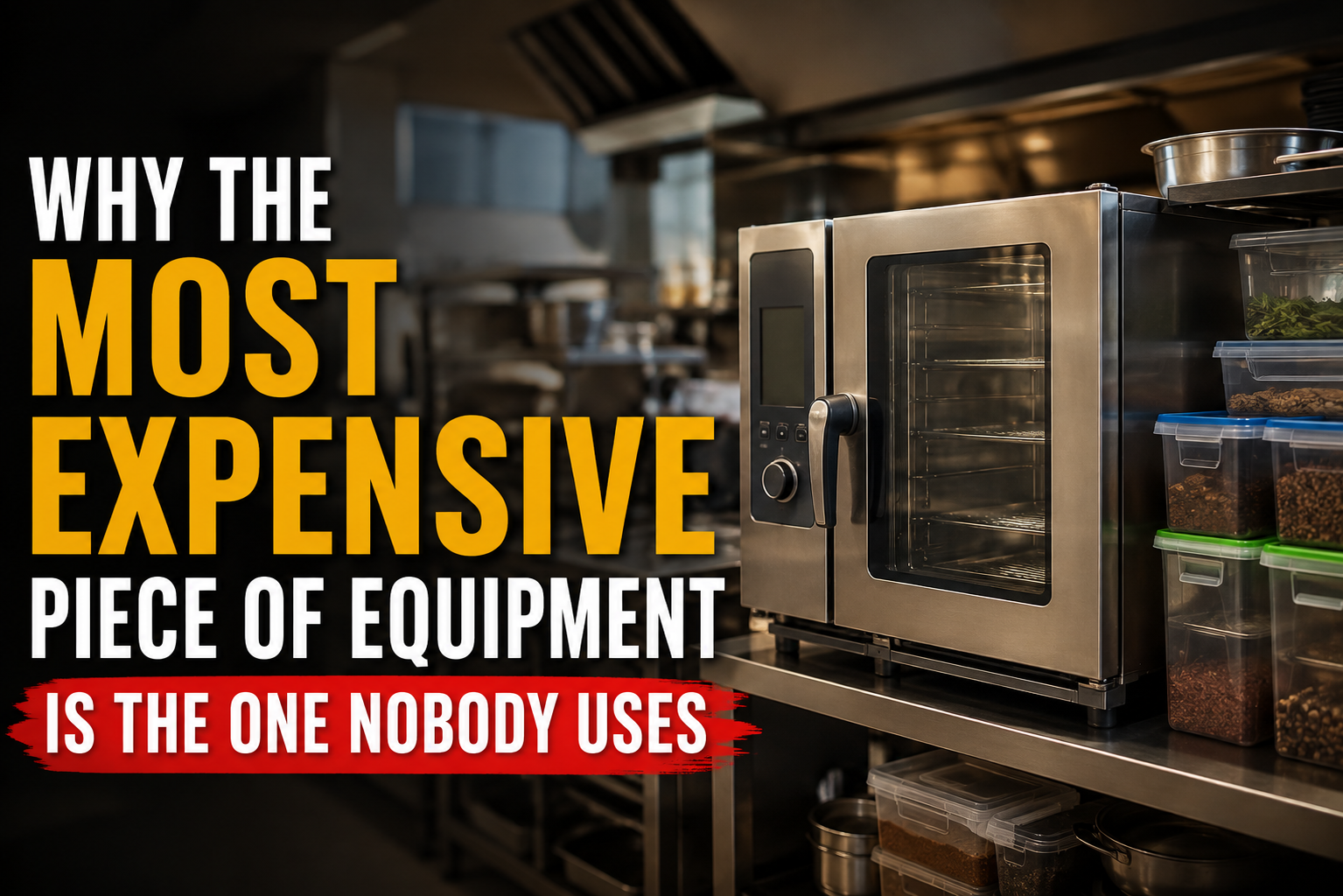
Let’s take a small example – a high-end combi. It’s actually a great and impressive piece of kit, be it steaming, roasting, baking, or holding, often with dozens of programmable settings. Put it in the right kitchen with the right menu and a team that knows how to use it, and it can easily replace two or even three other pieces of equipment while improving consistency across the board.
Put the same oven in a kitchen where the menu isn’t required for that range, or where turnover means nobody sticks around long enough to actually learn the programming, and it ends up running one basic function while the rest sits idle. Same machine, same price tag, wildly different outcome, and none of it comes down to the equipment but to the execution.
Advanced Doesn’t Always Mean Right
There’s a pull, in nearly every design process, toward whatever’s most capable on the market. More functions, more automation, more impressive numbers on the spec sheet. It makes absolute sense; nobody wants to invest in a piece of equipment that turns out to be too limiting after two years.
But here’s the truth: the most advanced equipment doesn’t always mean it’s the right one. Good equipment is equipment a real team can actually use, consistently, shift after shift, without needing more skill or attention than the kitchen has to give. A brilliant machine that sits unused because it’s too complex for the crew on hand, or too specialized for what’s actually on the menu, isn’t a brilliant investment anymore. It’s a very well-built shelf.
This is why operational programming has to happen earlier than most projects give it credit for. It isn’t a formality that clears the way for the fun part, picking out equipment. It’s the work that decides whether whatever gets chosen actually earns its space, or quietly turns into the thing nobody quite remembers how to use six months after opening.
The Cost Shows Up Long After the Invoice
The equipment decisions should always be made keeping in mind the kitchen operations, rather than getting any random equipment that is trending in the market. Buying equipment based on operational requirements always translates into a smoother workflow in the kitchen, comparatively low maintenance costs, and, most importantly, the expensive equipment gets used to its full potential rather than just becoming a decorative piece in the kitchen.
.Here’s the real takeaway. The most expensive piece of equipment in a kitchen is rarely the one with the highest price tag on the invoice. It’s the one that never got used the way it was meant to, taking up floor space and tying up capital while adding nothing to the operation it was supposed to make better.
This is exactly the gap OPSTRAH works to close before it ever becomes a problem. Rather than starting from a catalogue and working backward, OPSTRAH builds the equipment schedule from the operation itself, the real menu, the real volume, the real team that will be running the line every shift. That’s the operational programming and analysis work that happens before a single piece of equipment gets specified, so the kitchen ends up with tools people actually use, not ones that look good in a proposal and quiet down once the doors open.
Getting It Right From the Start
None of this means high-end equipment is a bad idea. It means every equipment decision needs to be grounded in a real understanding of the operation behind it, the menu, the volume, the staff, the service model, and where the business is actually headed, not just what impresses everyone in a design meeting.
That’s what real operational programming brings to a project. It’s the difference between a kitchen full of equipment that earns its space every shift, and one quietly paying, month after month, for a very expensive shelf.
So here’s a question worth sitting with. What piece of equipment have you seen go underused most often, and looking back, what would have caught it before it ever made it onto the spec sheet?
Your Vision. Dependable Results.